
The short answer
Ask two professional protection dog trainers what their own dogs must know, and you won’t hear about bite work or fancy obedience routines. You’ll hear about manners, a reliable recall, a dog that walks on a loose leash, a dog that is happy in a crate, and a down you can count on in an emergency.
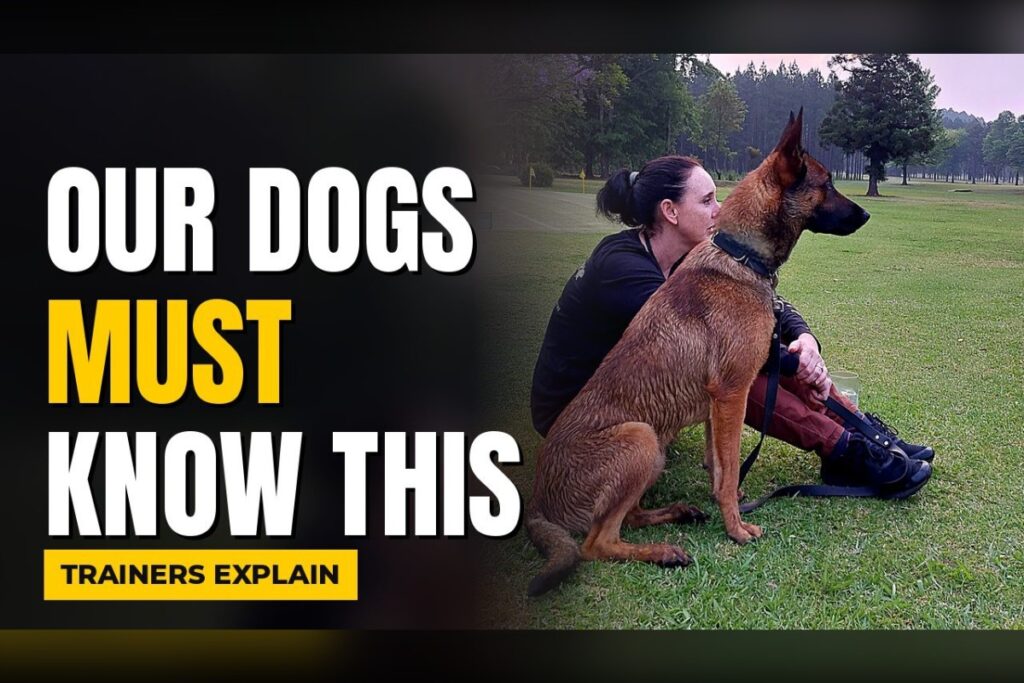
We’ve lived with personal protection dogs for more than a decade. In this video we sat down and asked each other one simple question: if a new dog walked into your home today, what would you teach it first? Our answers were almost identical, and they had very little to do with protection.
That’s the point. A protection dog spends 99% of its life being a companion. If it isn’t easy to live with, it doesn’t matter how well it bites.
1. Manners come first
If we had to choose, we’d take a dog that can’t sit or down but has good manners over a dog with perfect commands and none. For us, manners means:
- No jumping up on people.
- No barging through doorways ahead of you.
- No crashing into you or taking your legs out when running past.
This isn’t just about human preference. Watch dogs together and you’ll see the same rules. Young dogs jump on each other and wrestle when both have agreed it’s playtime. But a youngster who barges into an older dog or knocks its feet out from under it gets corrected, quickly. In dog language, that behaviour is rude.
When we teach a dog not to do it to us, we’re speaking in terms the dog already understands. And a large, powerful working-breed dog with good manners is a pleasure to live with. One without them is a liability.
2. A recall you can trust
A recall simply means your dog comes to you when you call it, by name or by whistle.
Picture yourself in the garden and you want your dog back. Or something is happening down the road and you don’t want your dog anywhere near it. You call once, and the dog turns around and comes straight back.
We don’t need a formal finish or a perfect sit in front. We just need the dog to come in close enough that we can clip on a leash, or simply keep it with us. For a protection dog, this matters even more. A dog that can’t be called away from a situation isn’t safe to own.
3. Loose-leash walking and everyday life skills
Imagine living alone on a farm or by the sea with just your dog. What would you actually need from it day to day? Not much:
- Walks on a leash without pulling you over.
- Jumps into the vehicle when asked, and out again when asked.
- Goes outside when you send it out.
- Doesn’t beg at the table.
None of this looks impressive on video. All of it makes the difference between a dog you enjoy and a dog you manage.
4. Crate training
Every one of our dogs is crate trained. A dog that is calm in a crate is easier to travel with, easier to leave for a short while, and easier to manage when visitors arrive.
In the car, a crate keeps the dog safe and keeps your seats intact. Seat covers don’t last long against a big working dog. With a crate in the vehicle, you can pop into the shop, close the crate, and know your dog is settled and secure until you’re back.
5. An emergency down
The last skill on our list is a quick down for emergencies. If a car is coming, or something happens and you can’t physically reach your dog, you want to drop it on the spot and keep it there until you get to it.
This isn’t a competition-style long down. It’s a safety skill: stop, lie down, stay put until I reach you.
What can wait
Sit, down, stay and formal obedience all have their place, and we teach them. They just come later. They are not what makes a dog livable.
And an honest confession: we’re professional trainers, and our own dogs at home will not stay out of the kitchen while we’re cooking. On the trial field, they’ll hold a perfect stay. At home, if we walk around a corner, they’re not going to sit and wait in case we’ve climbed out the bathroom window. Asking a house dog for a long stay with no one watching is asking a lot, and we’re fine with that.
Manners don’t come built in, either. Every dog has to be taught them. But they’re the first thing we teach, and the last thing we’d give up.
Frequently asked questions
What is the most important thing to teach a personal protection dog?
Manners. A protection dog lives in your home as a companion first. No jumping, no barging through doors and no crashing into people matter more day to day than any obedience command.
Does a protection dog need perfect obedience?
No. Formal commands like sit, down and stay are useful, but trainers who live with protection dogs prioritise manners, recall, loose-leash walking, crate training and an emergency down.
Why is recall so important for a protection dog?
Because you must be able to call your dog away from a situation you don’t want it involved in. A reliable recall is a core safety skill for any powerful dog.
Should a protection dog be crate trained?
Yes. A crate keeps the dog safe while travelling, protects your vehicle, and lets you leave the dog settled and secure for short periods.
Why do dogs see jumping and barging as rude?
In dog-to-dog interactions, barging into or jumping on an older dog outside of agreed play is treated as disrespectful and is usually corrected. Teaching your dog not to do it to you follows the same social rules.
Simple things, done well
As trainers, we don’t want walk-on-water dogs. We want dogs that are calm, polite and easy to live with, and that can step up if they ever need to. That’s exactly the kind of dog we raise and train at Our Protection Dogs.
Want to know more about living with a well-rounded protection dog? Get in touch with us, or browse our guides and coaching on the Learn & Shop page.