
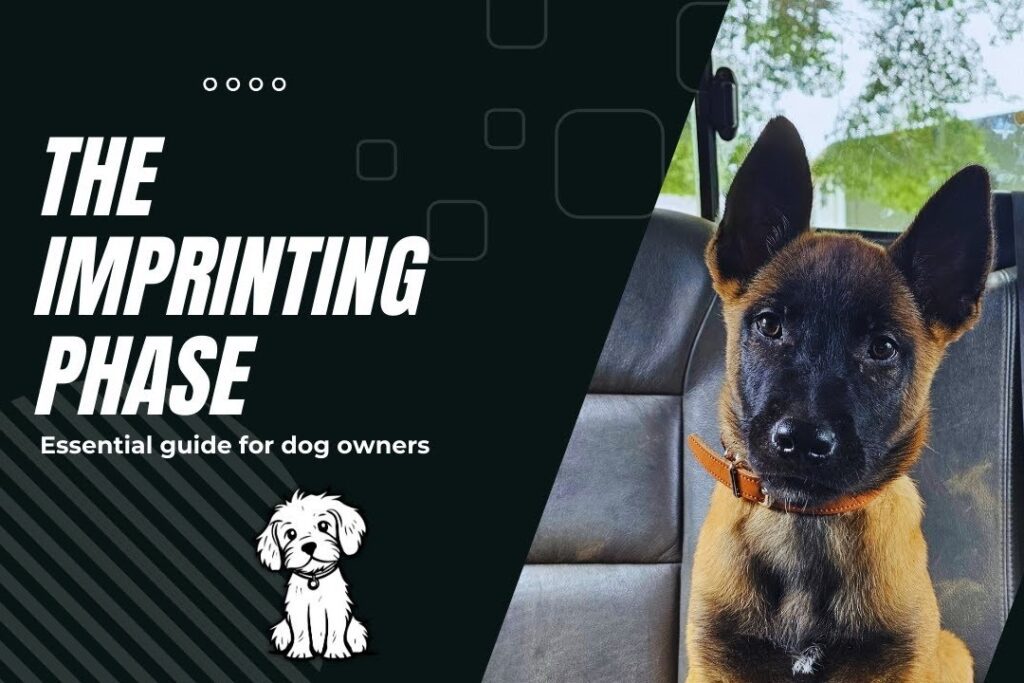
The imprinting stage is the period between roughly 3 and 12 weeks of age when a puppy learns from everything around it: people, sounds, places, other animals and the way it is handled. What a puppy experiences in this window tends to stick for life. For a new owner, the most important part is 6 to 12 weeks, because that is when the puppy comes home and you take over.
Below we explain what happens during this stage, what a good breeder will already have done, and how to use the weeks you have with your puppy.
Prefer to watch? Charles explains the imprinting stage in this video.
What happens before your puppy comes home (3–8 weeks)
A good breeder starts working with the litter from about 3 weeks old. This applies to any breed, from a Malinois to a poodle. Puppies are gradually introduced to different sounds: children screaming, loud music, fireworks, traffic. These are easy to play through a speaker, and they mean the puppy meets everyday noise as normal rather than frightening.
From about 6 weeks, a breeder of protection-line dogs will also begin developing prey drive, for example by letting the puppies chase a flirt pole. This is the foundation for bite work later, and at this age it is nothing more than a game.
When you choose a breeder, ask what they do with the litter during these weeks. The answer tells you a lot.
Your job: the 6–12 week window
Most puppies go home at around 8 weeks. That leaves you about four weeks of the imprinting stage, and they go quickly. Spend time with your puppy every day.
1. Socialise widely
Show your puppy as much of the world it will live in as you can. You can’t predict everything, but you can cover a lot:
- people of different ages, including children
- other animals
- plastic bags, umbrellas and unusual objects
- loud noises and moving cars
- getting in and out of the car, and riding in it
- wearing a collar and walking on a lead
Until your puppy’s vaccinations are complete, choose safe settings: carry the puppy in public places, invite people to your home, and avoid areas where unknown dogs gather. Your vet can advise on timing.
2. Teach your puppy how to learn
The most valuable thing you can teach a young puppy is how to train. We start with positive reinforcement: luring the puppy into a sit or a down with food in the hand, and rewarding the behaviour the moment it happens. Once the puppy understands that its actions earn rewards, it becomes eager to work things out, and everything you teach later builds on that. (New to luring? Read Luring: The First Thing to Teach Your Dog.)
As the puppy grows and understands what’s being asked, fair boundaries are introduced as part of a balanced approach. At this age, though, the balance should lean heavily towards reward and success.
3. Build house manners and a routine
Not jumping up on people, staying off the couch and not barging through doors are much easier to teach now than to fix later. A puppy that learns these rules early understands them for life.
That doesn’t mean it will never test you. Malinois and Dutch Shepherds in particular will try their luck. But when they do, they know the rule, and keeping it in place is far easier because the groundwork was laid during imprinting.
4. Set your puppy up to succeed
Whatever your puppy experiences now, good or bad, it remembers. So make it as positive as you can, and avoid situations where you’ll have to reprimand it.
Put your shoes away so you never have to punish the puppy for chewing them. Keep the children’s toys out of reach. This matters more than people think. We regularly see dogs come in for training that pick up a ball and then drop it, or refuse to retrieve at all. Often the cause is a puppy that was told off a few times for picking things up. It learned that carrying objects gets it into trouble, and that lesson stuck.
Why early drive work pays off later
We stop bite work during teething, when the puppy’s mouth is sore. But when we pick it up again at around 7 to 8 months, with the adult teeth in, the dogs go straight into it within one or two sessions. They remember the fun they had with it as puppies. That positive association, built during imprinting, carries through.
Don’t let fear keep your puppy at home
Many new owners are nervous about taking their puppy out in case something goes wrong. The answer isn’t to keep the puppy away from the world. It’s to plan.
Set up situations where you control the outcome. If friends are coming over, give them a few treats. When the puppy runs to the gate, they ask for a sit (which you’ve been practising), reward it, and praise the puppy for not jumping up. Your visitors don’t need to be dog trainers. They just need to follow simple instructions.
Think creatively about how to set your puppy up to win. Every good experience you create now is one it carries for life.
Frequently asked questions
At what age is a puppy in the imprinting stage?
Roughly 3 to 12 weeks. The breeder handles the first part; owners usually have the puppy from about 8 weeks.
Can a bad experience during imprinting have lasting effects?
Yes. Frights and harsh corrections at this age can stay with a dog for life, which is why we keep everything as positive as possible.
Should I correct my puppy during the imprinting stage?
Focus mainly on rewarding what you want and managing the environment so mistakes don’t happen. Fair boundaries come in gradually as the puppy learns.
When should protection puppies start bite work?
A good breeder starts building prey drive with play from around 6 weeks. Bite work pauses during teething and resumes at about 7 to 8 months.
Is it too late if my puppy is older than 12 weeks?
No. Socialisation and training continue throughout a dog’s life. The imprinting stage simply makes it easier.
Watch the full video on YouTube. Raising a protection dog puppy and want guidance along the way? Visit Learn & Shop for our e-book, coaching and one-on-one online lessons.