
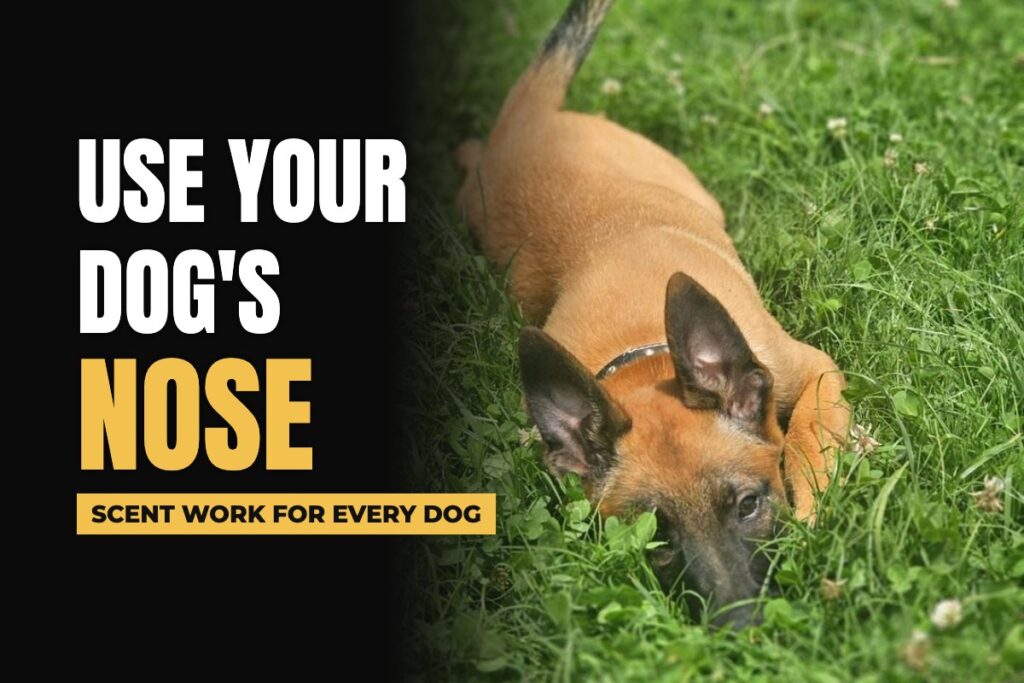
Scent work is one of the easiest ways to give your dog a real job, and you don’t need a police dog to do it. Whether you have a personal protection dog, a Belgian Malinois, a German Shepherd, a Dutch Shepherd or a family pet, you can start nose games at home this week.
This post covers three types of scent work: detection, tracking and trailing. For each one we explain what it is and how an everyday owner can get started. It isn’t an in-depth guide to professional detection training.
A note before we start: this is not about training your dog to find drugs, explosives or firearms. In most countries, including South Africa, that work requires a certified dog and a certified handler. Only authorised organisations may hold those substances for training. Leave that to the professionals. What we’re talking about here is fun, safe work that keeps your dog’s brain busy.
Why scent work tires your dog out
A dog’s most important sense is its nose. Dogs build pictures of the world from scent in a way we can’t. When your dog has to piece those scent pictures together to solve a puzzle, it works hard mentally.
That makes scent work perfect for the days you can’t get out, such as a rainy afternoon when your dog is restless and the walk is off. You can do all of it in your house, garage or garden.
Detection: teaching your dog to find a specific odour
Detection means teaching your dog to search for and find one particular smell.
Start with the search, not the odour. The first thing we teach isn’t a smell at all. We teach the dog to look for its favourite toy:
- Someone holds the dog while you take its favourite toy and hide it somewhere easy.
- Let the dog go and let it find the toy.
- Make the hides a little harder each time.
The whole family can join in, and within five minutes you’ll have a tired dog.
Then add an odour. Once your dog understands the game of searching, pick a smell that’s easy for you to get hold of. A particular tea bag works well, such as Earl Grey or rooibos, or you could use coffee. Hide it and reward your dog for finding it.
Dogs can learn human scent too. You can teach a dog to tell different people apart by their smell. Scent sealed in a jar lasts a surprisingly long time. We have worked with human scent that had been sealed for a year.
Detection can even be practical. We once trained a small terrier for a woman with a severe peanut allergy. The dog checked her forks and knives for traces of peanut oil before she ate.
Tracking: following footsteps
Tracking means your dog follows the exact path a person walked, nose down, smelling the footprints. It’s the style many people know from sport competitions such as IGP, but you don’t need to compete to enjoy it.
Tracking is the easiest of the three to start alone, because the dog follows your scent:
- Walk a short, straight line of 3 to 5 metres, dropping pieces of your dog’s food along it.
- Put a reward at the end.
- Let your dog follow the line and find its reward.
You don’t need much space. A small garden, or even a carpet, is enough for those first tracks. Make them longer and harder gradually.
Trailing: finding a person with every clue available
Trailing is more sophisticated than tracking. The dog doesn’t rely only on scent on the ground. It also uses scent in the air and scent that has caught on trees, walls and parked cars.
The difference shows when the wind blows. A tracking dog follows the person’s route step by step. A trailing dog may cut across a whole section, heading straight to where the wind has carried the scent. The dog has to use all its senses and solve the puzzle itself, which makes it a harder exercise. It’s the kind of work used in security, by the police and correctional services, and to find missing people.
How to start:
- You’ll need a helper. Someone holds the dog while you run off and hide, because your dog naturally wants to find you.
- Reward the dog when it finds you, with food or a toy. Use whatever motivates your dog most.
- Gradually make the trails longer.
This is a great game for children: they run off with the dog’s toy, hide, and the dog comes to find them and play.
One important warning. If your dog is trained so that the reward at the end is a bite, do not use children, grandparents or other family members as the person hiding. Bite-motivated trailing is for experienced handlers and trainers only. For family games, keep the reward to food or a toy.
Keep it fun
Whichever you try, make it a game. Use plenty of positive reward, keep sessions short and simple, and stop while your dog still wants more. A dog that enjoys scent work will keep getting better at it.
Watch the full video on our YouTube channel. If you’d like help getting started with your own dog, contact us at info@ourprotectiondogs.com or visit ourprotectiondogs.com.
Charles and Marilé
Frequently asked questions
What’s the difference between tracking and trailing?
In tracking, the dog follows the exact footsteps a person walked, nose to the ground. In trailing, the dog also uses scent in the air and on nearby objects, so it may cut corners to reach the person faster.
Can I do scent work with a pet dog?
Yes. Any dog can learn nose games, from a family pet to a working breed like a Malinois or German Shepherd.
What can I use to start detection at home?
Start with your dog’s favourite toy to teach the search. Then move on to an easy household smell, such as a particular tea bag or coffee.
Can I train my dog to find drugs or explosives?
Not as a private owner. In most countries, including South Africa, this work requires a certified dog and handler, and only authorised organisations may hold those substances for training.
How much space do I need?
Very little. Detection games work indoors, and first tracks of 3 to 5 metres fit in a small garden.